
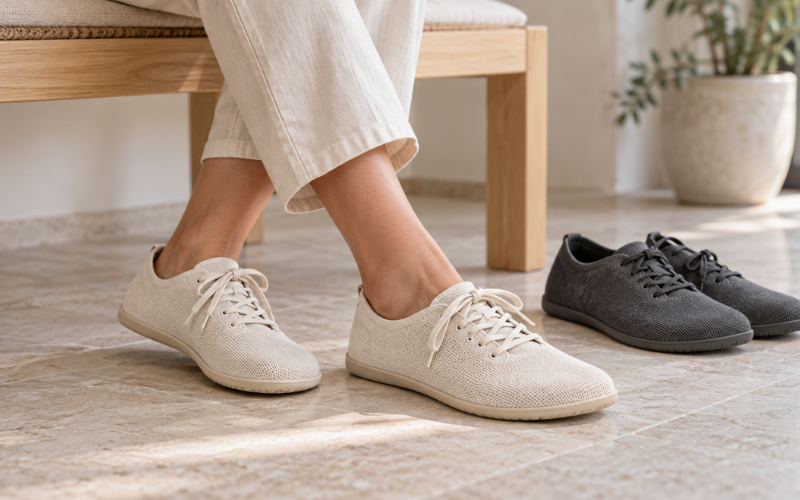
Finding the best minimalist shoes for women starts with understanding what makes this footwear different. Minimalist shoes generally have flexible soles, little cushioning, a low heel-to-toe drop, and room for the toes to spread. They aim to put less material between your feet and the ground while still providing a covering for everyday movement.
The word “minimalist” can also describe appearance. A plain white sneaker may look simple but have a thick sole, raised heel, and narrow front. Here, minimalist means how the shoe is built, rather than its color or styling.
Choosing a pair involves more than finding the thinnest sole. Fit, comfort, grip, intended use, and your experience with less cushioned footwear all matter. A shoe that feels comfortable during a short shopping trip may feel different during a full working day.
Best Minimalist Shoes for Women by Everyday Need
Rather than treating one model as a universal winner, compare shoes according to their main purpose. These categories explain what to look for without presenting untested products as proven favorites.
Best for Everyday Walking and Errands
For everyday walking, look for a flexible sneaker with a secure fastening and enough room across the toes. The upper should feel comfortable when your foot bends, without seams rubbing against sensitive areas.
Consider your usual surroundings. Smooth indoor floors, rough pavements, and wet paths place different demands on the sole. An everyday shoe should have suitable grip and feel comfortable during the trips you actually make.
Best for Work and Casual Outfits
For an office or casual workplace, a simple lace-up shoe, flat, or ankle boot may fit your wardrobe. Check the construction carefully, because a wide-looking shoe can still narrow around the toes.
Slip-on styles need particular attention to fit. Your heel should stay in place without requiring you to curl your toes to hold the shoe on. Follow workplace requirements where protective footwear or specific slip resistance is necessary.
Best for Running
Minimalist running shoes should suit your running surface and fit securely during movement. For roads, compare sole coverage and comfort on hard ground. For trails, examine tread, fastening, and protection from rough surfaces.
Running in less cushioned footwear is a separate decision from wearing it casually. If you are considering a major change, seek advice on whether it suits you and how to make the transition gradually.
Best for Gym Workouts
For controlled strength exercises, some women prefer a flat shoe with a firm connection to the floor. Look for secure laces, reliable grip, and an upper that holds your foot during your usual movements.
A flexible casual sneaker may not suit fast sideways movements, repeated jumping, or every fitness class. Choose according to your workout rather than assuming that every minimalist shoe is suitable for training.
Best for Beginners
For a first pair, prioritize an easy fit and a manageable change in underfoot feel. You do not need to choose the most extreme barefoot design.
A shoe with a little more material underfoot may feel more approachable than an especially thin model. However, extra cushioning alone does not guarantee an easy transition, so begin with limited wear.
Best for Wider Feet
For wider feet, compare the whole shape of the shoe. A roomy front does not necessarily mean that the middle of the shoe or heel will also fit comfortably.
Look for clear width information and photographs taken from above. Avoid buying extra length simply to gain width, because an overly long shoe can introduce slipping and awkward movement.
Best Budget Options
A useful budget option should provide a comfortable fit, suitable grip, and clear product information. Check whether the listing explains sole thickness, heel-to-toe drop, materials, and sizing.
Include delivery and possible return charges when comparing prices. An affordable shoe becomes poor value if it cannot be exchanged or spends most of its time unworn.
What Makes a Minimalist Shoe Worth Choosing
The toe box is the front section surrounding your toes. Its shape matters as much as its advertised width. Some designs taper toward the big toe, while others provide more room across the front. Your toes should have usable space without your whole foot sliding around.
Flexibility affects how the shoe feels when you move. The sole should bend comfortably with your foot, but being easy to fold does not automatically make a shoe better. Pay attention to comfort during walking, rather than judging quality through a bending demonstration alone.
Heel-to-toe drop describes the difference in sole height beneath the heel and forefoot. A zero-drop shoe places them at the same height. This is different from sole thickness: a shoe can be flat from heel to toe while still having substantial cushioning.
Ground feel refers to how clearly you notice the surface beneath your feet. A thinner sole usually makes textures more noticeable, but the amount you enjoy is personal. Strong ground feel may be pleasant on a smooth path and less comfortable over scattered stones.
Also examine the fastening, outsole, seams, and upper material. A lightweight mesh shoe may suit warm weather, while a more enclosed upper may suit cooler conditions. Low weight is useful, but it should not come at the expense of the durability or protection you need.
Finding the Right Fit for Your Feet
Measure both feet while standing, following the brand’s instructions. Record length and width, and use the larger foot as your starting point. Do not assume that your usual size will translate perfectly between different shoe shapes.
Try shoes with the socks you expect to wear. A thicker sock can change the available space across the toes and over the top of the foot. Trying them later in the day can also help you assess fit when your feet are less likely to be at their smallest.
When standing and walking, check that your longest toe does not press against the front. Your toes should be able to move without rubbing against the sides. At the same time, the heel and middle of the shoe should hold your foot securely. AAOS recommends assessing athletic shoes with the intended socks, adequate toe room, and a secure heel.
Walk around indoors, turn, and take a few steps at your normal pace. Notice pressure from seams, laces, or the tongue. A spacious front can feel unfamiliar, but it should not disguise a poor fit elsewhere.
For online purchases, read the specific model’s size guide. Check whether measurements refer to foot length or the shoe’s internal length. Review return conditions before ordering, and keep the shoes clean until you decide whether they fit.
Matching Minimalist Shoes to Your Routine
Start with the activity that will account for most of your wear. If you mainly walk to nearby shops, your priorities may be easy fastening, pavement grip, and a comfortable upper. If you spend hours standing at work, sustained comfort deserves more attention than how light the shoe feels initially.
Think about the surfaces you encounter throughout the day. A commute may involve wet steps, smooth station floors, and uneven pavements. The sole needs to handle that mix, rather than perform well only on the surface shown in a product photograph.
For running, distinguish between roads, tracks, and trails. Rough routes may require more protection underfoot than a smooth path. Regular gym use also calls for a closer look at how securely the shoe holds your foot during exercise.
Your wardrobe matters too. The best minimalist shoes for women should be practical enough to wear regularly. A color and shape that suit your usual clothes may offer more value than a striking design you struggle to style.
Weather can change the decision. Breathable mesh may be comfortable in heat but unsuitable for rain or cold mornings. Water resistance, warmth, and drying time deserve attention if the shoes will be part of your daily routine.
The Comfort Benefits and Practical Trade-Offs
A well-fitting minimalist shoe can feel less restrictive across the toes. A flexible upper and sole may also make it easier to move without the stiff sensation of some conventional shoes. These are features you can assess directly during a fitting.
Some women enjoy feeling the ground more clearly. Others prefer cushioning that softens the sensation of hard surfaces. Neither preference makes someone better at choosing footwear; comfort depends on the person and situation.
The main trade-off is reduced material underfoot. Thin soles make uneven surfaces more noticeable, and lighter uppers may offer less protection from weather or knocks. Consider these differences alongside the freedom of movement that attracted you to the shoe.
Time on your feet also matters. A pair can feel pleasant for twenty minutes yet become tiring over a longer outing. Assess comfort across realistic periods instead of assuming the first impression tells the whole story.
Minimalist footwear should not be treated as a guaranteed way to correct posture, cure foot pain, or prevent injury. If you have an existing foot condition, reduced sensation, or prescribed footwear needs, discuss a change with a qualified clinician before choosing a substantially different shoe.
Starting With Minimalist Shoes Without Rushing
Begin with a short period of ordinary walking in a familiar setting. Keep your existing comfortable shoes available, and avoid making the first outing a long walk, busy travel day, or demanding workout.
Pay attention to how you feel during wear and afterward. Increase use only when the current amount remains comfortable. There is no universal schedule that suits every wearer, and a fixed challenge should not take priority over your response.
Change one demand at a time. Increasing the time spent in new shoes while also adding hills, speed, or extra exercise makes it harder to understand what is causing discomfort.
Walking comfortably in minimalist shoes does not automatically mean you are ready to run in them. Treat running as a separate transition, with its own gradual introduction. AAOS advises getting guidance on suitability and moving slowly when changing to barefoot-style running.
Do not use pain as a sign that the shoes are working. Stop if you develop sharp pain, swelling, numbness, or discomfort that changes how you walk. Persistent or recurring symptoms deserve professional assessment rather than repeated attempts to push through.
Price, Durability, and Value Before You Buy
Compare price with realistic use. A pair that fits well and works for your daily routine may offer better value than a cheaper shoe that rubs or a costly pair reserved for occasional outings.
Inspect the areas likely to experience wear. The sole should be attached neatly, stitching should look consistent, and the upper should suit the activity. Lightweight fabric may be practical for casual use but less suitable for repeated contact with rough ground.
Check care instructions before purchasing. Some shoes tolerate gentle washing, while others need surface cleaning and careful drying. Do not assume that every fabric sneaker can go into a washing machine.
Review warranty terms separately from return terms. A warranty may cover certain manufacturing faults without covering ordinary wear. Returns may depend on condition, location, and whether you bought from the brand or another retailer.
There is no single lifespan for all minimalist shoes. Usage, surface, materials, and care all influence wear. Pay attention to worn tread, damaged uppers, or changes that affect fit rather than relying only on the age of the shoe.
Common Buying Mistakes to Avoid
One common mistake is choosing a shoe because it looks simple. Neutral colors and clean lines say little about flexibility, cushioning, or toe room. Read the construction details if functional minimalist footwear is what you want.
Another mistake is assuming that all wide toe boxes fit alike. Feet vary in toe shape, heel width, and the amount of space needed above the foot. A brand that suits someone else may still feel awkward on you.
Sizing up to solve every fit problem can also disappoint. More length does not reliably fix pressure across the middle or top of the foot. Look for a more suitable shape when the correct length feels narrow.
Avoid expecting one pair to cover every activity. An everyday flat may suit an office but lack the grip or secure fit needed for a workout. Buy first for your main use, then assess other activities separately.
Finally, be cautious about promises of immediate comfort or dramatic health changes. Customer experiences can offer useful clues about sizing and wear, but they cannot guarantee the same result for your feet. Give greater weight to fit, clear specifications, and realistic expectations.
Conclusion
The best minimalist shoes for women combine a suitable shape, comfortable flexibility, secure fit, and a sole that works for the intended activity. The thinnest or most popular pair is not automatically the most useful choice.
Measure your feet, compare model-specific details, and consider your everyday surfaces before buying. If you are new to minimalist footwear, introduce it gradually and keep comfort at the center of the decision.
A good pair should earn its place through regular, comfortable use. Choose footwear that fits your feet and your day, without expecting it to solve every foot-related concern.
FAQs
1. Are minimalist shoes and barefoot shoes the same?
The terms often overlap. Barefoot shoes usually emphasize thin, flexible soles, a flat heel-to-toe profile, and toe room. Minimalist shoes can include a wider range of designs with some cushioning or a small heel-to-toe drop. Check the specifications rather than relying on the label.
2. Can women wear minimalist shoes all day?
Some women find them comfortable for extended wear, while others prefer more cushioning or support. Your experience, activities, and walking surfaces matter. If you are new to them, start with shorter periods instead of immediately wearing them throughout a full day.
3. How should minimalist shoes fit?
They should provide room for your toes while holding your heel and middle of the foot securely. Your toes should not press against the front, and your foot should not slide excessively. Follow the model’s sizing guidance and test the fit with your usual socks.
4. Are minimalist shoes suitable for women with wide feet?
They can be, particularly when the toe-box shape matches the foot. However, a roomy toe box does not guarantee enough width elsewhere. Compare measurements and check for pressure across the middle and top of the foot before deciding.
5. Do minimalist shoes prevent foot pain or running injuries?
They should not be purchased with that guarantee. A comfortable fit may reduce rubbing or crowding, but pain and injuries have different causes. If you have recurring symptoms, seek individual advice before making a major footwear change.