
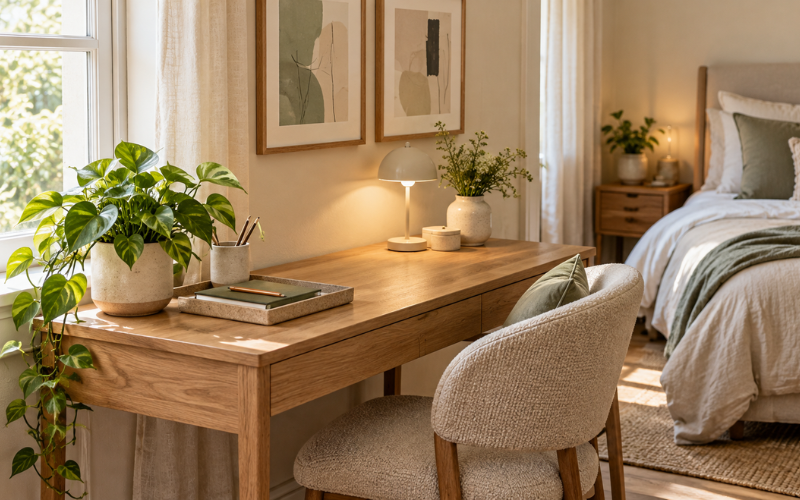
A bedroom desk often serves several purposes. It may be where you study, work from home, write, or manage everyday tasks. Because it shares space with your bed and personal belongings, its appearance matters beyond the desktop. A thoughtful setup should support your daily routine while fitting the quieter mood of the bedroom.
If you are wondering how to decorate bedroom desk area spaces, begin with what you need to use comfortably. Placement, colors, lighting, wall decor, and storage all shape the result. Personal touches can then make the desk feel welcoming without taking over the space you need for work.
You do not need a large room or an expensive furniture update. Whether you have a compact corner desk or a wider work surface, a few well-chosen changes can make the area feel more organized and connected to the rest of your room.
Start With Your Desk’s Purpose and Available Space
Before choosing decorations, think about how you use the desk. A laptop setup may need room for a mouse and notebook. Studying may require space for open books, while drawing or craft work could need a larger clear surface. These needs should guide how much decoration the desk can hold.
Place your everyday items on the desk and try a normal task. Open your notebook, move your chair, and reach for your supplies. This gives you a clearer picture of the available space than looking at an empty desktop.
Check the surrounding area as well. Your chair should move without hitting the bed, and drawers should open easily. Notice where outlets sit and how charging cables will reach them. Once these practical needs are covered, you can decorate the remaining space with more confidence.
Choose a Desk Position That Works With the Bedroom
The best desk position depends on your room’s layout and how you use the space. A window location can bring daylight to the work area, but placing a screen directly in front of or opposite a bright window may create glare. A position beside the window is another arrangement to test.
A corner desk can create a defined work area while keeping the center of the bedroom open. However, check whether the corner has enough light and whether you can pull the chair back comfortably. Avoid squeezing the desk into a spot that makes everyday movement difficult.
A bedside placement may suit a small room, especially when the desk also holds a lamp or other bedside essentials. Keep the sleeping side simple so work supplies do not spread toward the bed. Wherever you place the desk, leave a clear route around nearby furniture.
Connect the Desk Area With Your Bedroom’s Style
A desk feels more settled when it shares a few visual details with the bedroom. Start by noticing the colors already present in your bedding, curtains, rug, or furniture. Choose one or two of those shades for a desk accessory, picture frame, or lamp.
You do not need to match everything. For example, a cream bedroom with oak furniture could include a cream organizer, a wooden frame, and a muted green desk mat. The repeated colors create a connection, while the green adds a little variety.
Materials can provide the same link. A woven basket may echo a textured rug, while a metal lamp can relate to drawer handles elsewhere in the room. Give the desk its own character, but keep a few shared details so it feels like part of the bedroom.
Style the Desktop Without Crowding It
When deciding how to decorate a bedroom desk area, arrange the useful items first. Position your laptop or monitor, lamp, and everyday supplies where you can reach them comfortably. Then look for a small space that can hold decoration without interrupting those tasks.
A simple arrangement might include a pen holder, a shallow tray, and a framed photo. Each piece should earn its place through usefulness, personal meaning, or appearance. A desk mat can also bring color to the setup while giving the work area a clear visual boundary.
Keep the main working surface open. You should be able to put down a book or write a note without moving several objects first. If the desk looks crowded, remove one item and reassess it. A little empty space often helps the remaining details look more deliberate.
Layer Lighting for Tasks and a Softer Evening Look
Lighting should help you use the desk comfortably and suit the bedroom after dark. A desk lamp gives you light where you need it, while a nearby bedside lamp or other softer room light can make the area feel less stark in the evening.
Choose a lamp that fits the available surface. A large base may take up too much room on a narrow desk, while a clamp lamp can free up space if the desk edge supports it. An adjustable shade helps you direct light toward a notebook or other task.
Test the lamp from your seated position. Check for reflections on your screen and shadows across your writing area. For handwriting, placing the lamp opposite your writing hand may reduce shadows. Coordinate its color or finish with another bedroom detail to make it feel at home.
Decorate the Wall Above the Desk With Purpose
The wall above a desk offers room for decoration without using the desktop. Choose something that supports the mood or function of the area. Artwork creates a visual focus, while a pinboard can hold reminders and a pegboard can organize lightweight supplies.
Floating shelves provide space for books and decorative objects, but their depth and position need care. They should not interfere with your screen, lamp, or headroom. Before installing anything, hold a paper outline against the wall to check its size and placement.
Keep the display in proportion to the desk. One medium print or a small group of frames may suit a compact surface better than a wide arrangement. For rental rooms, check what mounting methods are allowed and follow the product’s surface and weight instructions. Removable fittings are not suitable for every wall or item.
Make Storage and Cable Management Part of the Design
Storage becomes part of the decor when it is chosen with the whole area in mind. Pen holders, trays, boxes, and baskets do not have to match exactly, but a shared color or material can make them look connected.
Keep frequently used supplies within easy reach. Pens might sit in one holder, while notebooks go in a drawer or upright organizer. Items used less often can move away from the desktop. This keeps useful tools accessible without displaying every supply you own.
Give charging accessories a clear place too. Cable clips can help guide cords along the back of the desk, and a small tray can hold a charger when it is not in use. Leave enough cable length for normal movement, avoid pinching cords in drawers, and keep plugs accessible.
Add Personality With Plants, Photos, and Meaningful Objects
Personal details make a bedroom desk feel like your space. A photograph, a small piece of art, or an object from a memorable trip can bring character without requiring a large display. Choose a few items you enjoy seeing rather than filling the surface with decoration.
If you want a plant, consider the light available where it will sit. Check the care needs of the specific plant instead of choosing only by appearance. Keep its container away from electronics and use suitable protection beneath it when watering.
Varying heights can make a small arrangement more interesting. A low tray beside a taller frame creates variety without needing many objects. Keep taller pieces toward the side or back, where they will not block your view or interfere with reaching for everyday items.
Adapt the Decor for a Small Bedroom Desk
A small desk needs careful choices because even modest accessories can take up valuable room. Look for pieces that serve a clear purpose, such as an attractive pen holder or a compact lamp. Avoid adding several organizers when one well-sized container would do.
Vertical space can help, but use it selectively. A narrow wall shelf or pinboard may move a few things off the desktop. Check that anything above the desk leaves enough room for your screen and comfortable movement.
Keep the decorative palette simple so the area feels visually calm. One picture, one useful container, and a coordinated lamp may be enough. Test the setup with your usual task before considering it finished. A small desk should still let you open a notebook, use your keyboard, or work with the materials you need.
Refresh Your Desk Area on a Realistic Budget
Start a budget refresh by looking around the bedroom. A frame, small dish, basket, or unused lamp may already suit the desk. Moving an item from another part of the room can change the setup without adding to the total amount of decoration.
Clear the desk and rearrange it before buying anything. You may discover that the main problem is a bulky organizer, poor lamp placement, or too many objects. A change in layout can reveal what is actually missing.
Spend according to the gap you need to solve. If paperwork keeps piling up, storage may be more useful than another decorative piece. If the desk feels disconnected from the room, a coordinated mat or frame could provide the finishing detail. Measure first and choose purchases that fit your available space.
Bedroom Desk Decorating Mistakes to Avoid
One common mistake is decorating for an empty desk rather than a working one. A setup may look attractive in a photo but feel frustrating when you open a book or use a mouse. Always check the arrangement with your everyday equipment in place.
Another problem is adding too much above the desk. Crowded shelves and busy wall displays can make the corner feel heavy, especially in a small bedroom. Leave space between objects and avoid filling every surface.
Comfort and access can also get overlooked. Decorations should not block drawers, cover outlets, or force you into an awkward position. Cables and lighting deserve attention because both affect the finished appearance. Finally, avoid buying storage piece by piece without considering what you need to hold or how the pieces will look together.
Conclusion
Learning how to decorate bedroom desk area spaces starts with understanding how you use the desk and how it fits into the room. Plan the placement first, keep enough working space, and use colors and materials that connect with the bedroom. Add lighting, organized storage, and a few personal details to complete the setup.
Before finishing, sit down and use the desk. Check that you can move comfortably, reach your supplies, and put work materials away easily. Adjust anything that gets in the way. The most useful arrangement is one you enjoy looking at and can comfortably use every day.
FAQs
1. How can I make my bedroom desk look attractive without adding clutter?
Begin by removing anything you do not use regularly. Keep the main work area clear, then add a small number of coordinated pieces, such as a lamp, pen holder, and photo. Use drawers or nearby storage for extra supplies. Attractive everyday items can provide decoration without needing a separate collection of accessories.
2. What should I put on the wall above my bedroom desk?
Choose according to your needs and available space. Artwork adds a decorative focus, while a pinboard can hold notes and reminders. A shelf may suit books or a few display items if it leaves enough clearance. Check the arrangement from your seated position and use mounting methods suitable for the wall and the weight.
3. How do I decorate a bedroom desk that also serves as a bedside table?
Leave a small, easy-to-reach area for bedside essentials and keep work supplies contained. A drawer, tray, or portable organizer can help you clear the surface at night. Choose a lamp that works for the placement, and avoid filling the side nearest the bed with papers, electronics, or decorative objects that make access awkward.
4. How can I make my desk fit a bedroom with mixed furniture?
Look for a detail you can repeat across the room. This might be a color from the bedding, a wood tone, or a metal finish. Bring that detail into the desk through a lamp, frame, or organizer. A few shared elements can connect different furniture styles without requiring every piece to match.
5. How can I decorate a bedroom desk for both work and relaxation?
Choose decor you enjoy, but make work supplies easy to put away. Keep notebooks, chargers, and loose papers in a drawer or designated container when you finish. Use task lighting while working and softer room lighting afterward. A simple desktop with a personal photo or artwork can feel welcoming during both parts of your day.