
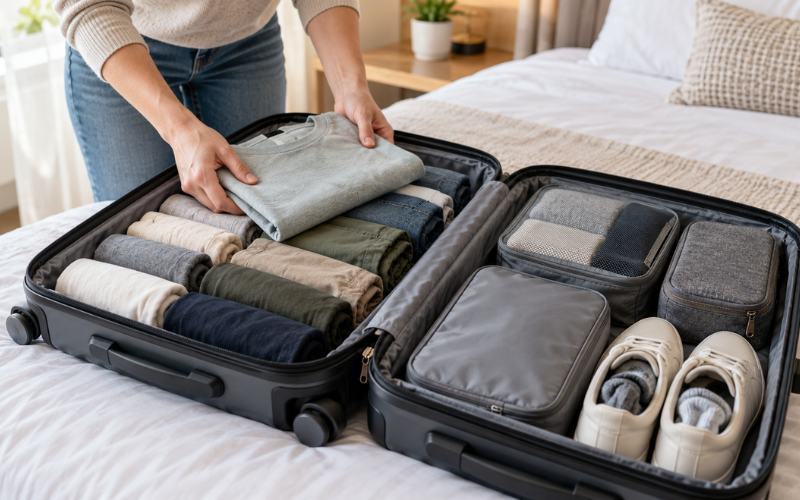
Packing efficiently means fitting what you need into your suitcase while keeping everything organized and easy to reach. It is not about squeezing in as many belongings as possible. A well-packed suitcase helps you avoid bringing unnecessary items, find things without emptying your bag, and keep clothes in wearable condition.
A little planning makes the process easier. Start with your trip’s length, weather, and activities, then choose clothes that work together. Pack each item with a purpose, use empty spaces wisely, and keep travel essentials somewhere convenient. Before you leave, check your suitcase’s weight and make sure it closes without a struggle.
Start With Your Trip and a Simple Packing List
Before opening your suitcase, picture what you will actually do on the trip. A city break, a beach holiday, and a work trip call for different clothes and belongings. The destination, weather, length of stay, and planned activities should guide your packing choices. This simple check can prevent the common mistake of packing for every possibility.
Make a short list based on your plans. Think about how many outfits you will need, whether you can reuse certain items, and whether you will have access to laundry. For example, a shirt that works with two pairs of trousers may be more useful than two shirts that each match only one outfit. Comfortable shoes that suit several activities can also save considerable space.
Choose versatile clothes in colors and styles that go together. You do not need to plan every outfit in detail, but it helps to know that most tops match most bottoms. A light layer can work over a daytime outfit and come in handy in a cool restaurant or on a chilly flight. If an item only works for one unlikely situation, consider whether it deserves space in your suitcase.
Set aside essentials before packing the rest. These may include prescription medication, glasses, chargers, travel documents, or clothing needed for a particular event. Keep them on your list so they do not get missed in the rush. At the same time, resist adding “just in case” items without a clear reason. If you can borrow, buy, or do without something at your destination, it may not need to travel with you.
Choose the Right Suitcase and Make a Packing Plan
The right suitcase gives you enough space for your trip without encouraging you to fill every corner. A small carry-on may be suitable for a short trip with light packing, while a longer stay or specialized activity may call for more room. Consider how you will travel, how far you will carry your bag, and whether you will need to move it through crowded streets or public transport.
Check your airline’s baggage allowance before choosing a bag or packing it. Size and weight limits can differ by airline, cabin class, aircraft, and route, so confirm the rules for every airline on your itinerary. The allowance also applies to items like wheels and handles when measuring luggage.
Once you know which suitcase you are using, decide what needs to be easy to reach. Put items needed during the journey, such as a sweater, headphones, or a snack, in your personal item or near the top of your carry-on. If you are checking a bag, keep valuables, travel documents, medication, and items you cannot easily replace with you, subject to the security rules for your route.
It can help to divide the suitcase into simple zones. For example, reserve one area for clothes, another for shoes, and a small pouch for toiletries and chargers. You do not need special organizers to do this. A clean bag or a small packing cube can separate categories and make it easier to find what you packed.
Pack Clothes to Use Space Well
There is no single best way to pack every piece of clothing. Rolling, folding, and bundling can all work, depending on the fabric, suitcase shape, and how you plan to arrange your belongings.
Rolling can be useful for casual clothes such as T-shirts, leggings, pajamas, and some soft trousers. Roll each item smoothly rather than tightly twisting it into a hard bundle. Place the rolls side by side so you can see what is packed and use small gaps between them for socks or other compact items. Rolling may save space for some clothes, but it does not prevent every fabric from wrinkling.
Folding is often better for structured or delicate clothes that may crease easily. Fold shirts along their seams and smooth them with your hand before stacking them. For dresses, jackets, and other longer garments, fold them carefully and place them near the top of the suitcase. If an item is especially prone to wrinkling, you may be able to place it in a garment bag or carry it separately.
Bundling means wrapping several garments around a soft center, such as a pouch of underwear. It can help keep a group of clothes together and reduce sharp folds, but it may be less convenient if you need to reach an item in the middle. Try it when you can unpack most of the bundle at your destination rather than needing different pieces along the way.
Pack heavier items close to the wheels of a rolling suitcase. This keeps the bag more balanced when you pull it and can help lighter items stay in place. Place flat items, such as a folded shirt or thin sweater, over the base. Then add rolled or folded clothes, filling gaps without forcing them into the case. Do not press down so hard that the zipper strains or delicate items get crushed.
Organize Small Items, Shoes, and Toiletries
Small belongings are easy to lose in a large suitcase. Group similar items together so you can find them quickly. A pouch for chargers and cables, a small bag for underwear, and a separate case for toiletries can keep the suitcase orderly. Clear pouches are useful if you want to see what is inside, but any clean, secure bag can help.
Shoes can take up more space than expected, so bring only the pairs your plans call for. Wear the bulkiest pair during travel if it is comfortable and appropriate. Pack the others along the sides or near the wheels, soles facing outward. A shoe bag can keep dirt away from clothing. You can also place small, clean items inside shoes, such as socks or a belt, to make use of their interior space. Avoid stuffing them so firmly that they lose their shape.
Toiletries should be contained to protect clothes in case a lid opens or a bottle leaks. Tighten the caps, check that lids are secure, and place liquids inside a sealed pouch. For extra protection, put a small piece of plastic wrap under a screw-top lid before closing it, if it fits safely and the product packaging allows it. Keep any toiletries you may need during the journey in your personal item.
For air travel, check the current security rules for your airport and route before packing liquids, gels, aerosols, or other restricted items in your carry-on. Requirements can differ between locations, and airport screening rules may change. Pack only what you need and keep items arranged so you can take them out easily if asked.
Keep Clothes Neat and Protect Fragile Items
A suitcase moves around during travel, so packing order matters. Place shoes, toiletry bags, and other heavier items where they are least likely to press on fragile belongings. Wrap delicate items in soft clothing or place them between cushioned layers. Keep breakable objects toward the center of the suitcase, away from the sides and corners, which may take more impact.
For clothes that wrinkle easily, avoid overfilling the suitcase or crushing them under heavier items. Lay a folded garment across the top if there is room, or use a thin layer of tissue paper between folds to reduce friction. Hanging the garment as soon as you arrive may help smooth minor creases. For a longer journey, consider whether a more wrinkle-resistant fabric would be a practical choice.
Keep clean clothes separate from shoes and worn items. A laundry bag or an unused packing cube can hold clothes that need washing during the trip. This makes it easier to find clean items and keeps odors or dirt from spreading through the suitcase. If you expect wet clothing, use a waterproof bag and keep it separate from dry belongings.
Avoid placing heavy objects on top of delicate items, and do not leave sharp or pointed objects loose in the suitcase. Pack them safely and check the relevant travel rules. If you are carrying expensive electronics or essential devices, keep them with you when possible and protect them from pressure and moisture.
Keep Travel Essentials Within Easy Reach
A thoughtfully packed suitcase should make the journey itself easier. Put items you may need in transit where you can reach them without unpacking everything. Depending on your trip, that might include a light sweater, a book, headphones, a reusable water bottle, tissues, or a change of clothes.
Keep travel documents, money, medication, and valuables in a secure place that stays with you. If you have medication you need during the journey, do not pack it somewhere inaccessible in checked luggage. Keep it in its original packaging when practical, especially if you may need to show what it is. Follow the requirements for your destination and check with your airline or relevant authority if you are unsure about a particular item.
Organize your personal item so the things you use most are easy to find. A small pouch for cables and another for travel documents can stop them getting tangled with snacks or clothing. If you are carrying a laptop or other device, check whether it must be removed for screening at your airport and pack it where you can take it out without unpacking your whole bag.
Think about what you would need if your checked suitcase arrived late. A small change of clothes, basic toiletries, and important medication may be useful in your carry-on, as long as those items are allowed under the rules for your journey. This is a practical backup, not a reason to duplicate your entire suitcase.
Check the Suitcase Before You Leave
When you have finished packing, close the suitcase gently. If you have to sit on it, pull hard on the zipper, or push items into the corners, take something out and repack. A suitcase that is too full can be harder to lift, may strain its closures, and leaves no room to organize anything you pick up during the trip.
Weigh the packed bag if you can, especially if you are flying. A luggage scale can help, but a household scale may also give you a useful estimate. Check the limit for your specific ticket and airline rather than relying on what you have been allowed to bring on another trip. If the suitcase is too heavy, remove nonessential items or move suitable belongings to another bag within its allowance.
Do one final check against your list. Make sure you have essentials, but also look for items you packed out of habit rather than need. Travel-sized versions of toiletries may reduce bulk, and you may not need a separate outfit for every day if you can rewear or wash some clothing.
Leave a little space for items you may bring back. You do not have to keep a large empty section; simply avoid packing the suitcase so tightly that there is no flexibility. If you expect to shop or bring home gifts, plan for them now rather than relying on an overstuffed bag to make room.
Conclusion
Learning how to pack a suitcase efficiently starts with deciding what the trip actually requires. Build a practical packing list, choose clothes that work together, and use a suitcase that suits both your plans and your airline’s allowance. Then arrange clothes, shoes, toiletries, and essentials so that they stay protected and are easy to find.
The aim is a suitcase that closes comfortably and supports the way you travel. A few minutes spent checking your list, weight, and packing order can make it easier to leave home prepared and find what you need when you arrive.
FAQs
1. How do I pack a suitcase efficiently for a week?
Start with your itinerary and expected weather, then choose a small group of clothes that can be mixed into several outfits. Pack only the shoes you expect to wear, organize small items in pouches, and plan to rewear or wash suitable clothes if needed. The right amount depends on your activities and access to laundry.
2. Is it better to roll or fold clothes in a suitcase?
It depends on the garment. Rolling often works well for soft, casual clothes, while folding can suit structured or wrinkle-prone pieces. Try both methods and use the one that keeps your clothes neat while fitting your suitcase and packing style.
3. How can I stop clothes from wrinkling in my suitcase?
Fold structured garments along their seams, avoid overpacking, and place delicate clothes near the top rather than under heavy items. You can separate folds with tissue paper or use a garment bag for items that need extra care. Unpack and hang clothes soon after you arrive.
4. What should I pack in my carry-on instead of my checked suitcase?
Keep travel documents, valuables, essential medication, and items you may need during the journey with you. A small change of clothes can also be useful if your checked bag is delayed. Check the rules for your airline, airport, and route before packing restricted items.
5. How do I make sure my suitcase meets airline requirements?
Check the current baggage size and weight limits for each airline on your itinerary, including connecting flights. Measure the suitcase with its wheels and handles, then weigh it after packing. Airline allowances can vary, so use the details for your specific booking rather than a general guideline.